Built To Bounce · a progressive plyometrics system

Learn how toactually programplyometrics.

There are thousands of plyometric exercises online, but no one tells you how to actually program them. This system teaches you why, when and how, then gives you twelve weeks of it for your goal: jump higher, a faster first step, light on your feet, or all three.

See what it covers
Lesson one, free, in full

If the way it teaches is not for you, you will find that out without spending anything.

Sound familiar

You have done plyometrics, but you haven't been taught them.

If two of these sound like you, this is for you.

You could not say what a box jump is for.Or a depth jump, or a hurdle hop.

Nobody told you how many is enough. So you either guess three or choose twenty and injure yourself.

You have been told they wreck your knees, or that everyone should do them.Both by people who sounded certain.

You do not know if you are ready.And nobody has given you a way to find out.

You were handed exercises without reasoning, so every decision after that was a guess.
Price

One price. Yours for good.

Built To Bounce: A Progressive Plyometrics System
Built To BounceSave €20 today
€47€27
  • Eleven videos, kept for life, no subscription
  • The reasoning: why, when, how much, and when to stop
  • All four goals worked end to end, twelve weeks each
  • The printable sheet, throws, and reading your own sport

€27 ends in

--Hrs
:
--Min
:
--Sec
Get Built To Bounce · €27
One paymentNo subscriptionYours for good

Instant access. Yours to keep.

The syllabus

Eleven videos, building on top of each other.

Five lessons before you jump, four goals, two to take it further.

Before you jump
01
What a plyometric isThe bounce off the floor, and why the goal comes first.
02
Learn to land firstThe two standards that decide whether you are ready at all.
03
Slow jumpsThe deep, slow tier most people have never seen.
04
Your weekWhere jumps sit in a session and a week.
05
Moving upFive ways to progress jumps and the check that lets you move up.
The four goals
06
Jump higher
07
Faster first step
08
Light on your feet
09
All three
Same reasoning, four different goals, each worked end to end for twelve weeks. You watch all four, and you run the one that matches you.
Take it further
10
ThrowsUpper-body plyometrics have their own rules.
11
Read your sportMap the sport, then map the athlete.

Stop guessing which jumps to do.

Eleven videos that teach you the reasoning, then show you what it looks like applied for twelve weeks.

Be straight with yourself

This is not for everyone, and I would rather you worked that out now.

Buy it if
  • ✓ You want to stop guessing which jumps to do, with twelve weeks written out for your goal
  • ✓ You want to understand plyometrics well enough to make your own calls
  • ✓ You already train and you want your jumping and plyos to have a clear reason and goal
  • ✓ You coach other people and you are tired of prescribing drills you cannot fully defend
  • ✓ You want to know when not to do them, which nobody ever teaches
Skip it if
  • ✗ You want somebody to test you and write your training. That is coaching, and this is not it
  • ✗ You want a follow along program and would rather not know why anything is in it
  • ✗ You are currently injured and looking for rehab. This is training, not treatment
  • ✗ You want a number promised to you. Nothing here measures you, so nothing here can promise that
Coach Dries
Coach DriesGP Method
Why Dries

I trained to get strong and big, and it left me tight, heavy, and slow.

For years, I chased a lean, muscular physique and the big three. The numbers went up, and so did everything I didn't want. I got even tighter. I felt heavy and slow. And eating for that size pushed my gut health further in the wrong direction. I was "strong," and I'd never felt less athletic.

In early 2025, I got the opportunity to prep athletes for the NFL Combine, which showed me what real athletic training looks like and put my weak links right in front of me. I'd built one quality, big-three strength, and ignored the rest. So that's what I changed: strength isn't just the big three, it's athletic, it's unilateral, and the big three.

But here's where it really matters. I took everything and applied it to myself and my clients. I'm not stronger on the big three than I was. But I'm faster, more explosive, more mobile, and more athletic than I've ever been, and my gut is in a much better place. And the results my clients achieved. Issues that I couldn't seem to figure out suddenly all made sense.

That's the GP Method: I find the weak link holding you back, whatever it turns out to be, and point your training straight at it.
MSc Strength & Conditioning @ ALTIS (in progress) EXOS Performance Specialist Pre-Script Level 3 Mentorships across North America & Europe Nutrition and health coaching credentials
Inside a lesson

This is what one lesson looks like.

Lesson one is free, in full, at the top of this page. This is lesson eight, so you can see the shape.

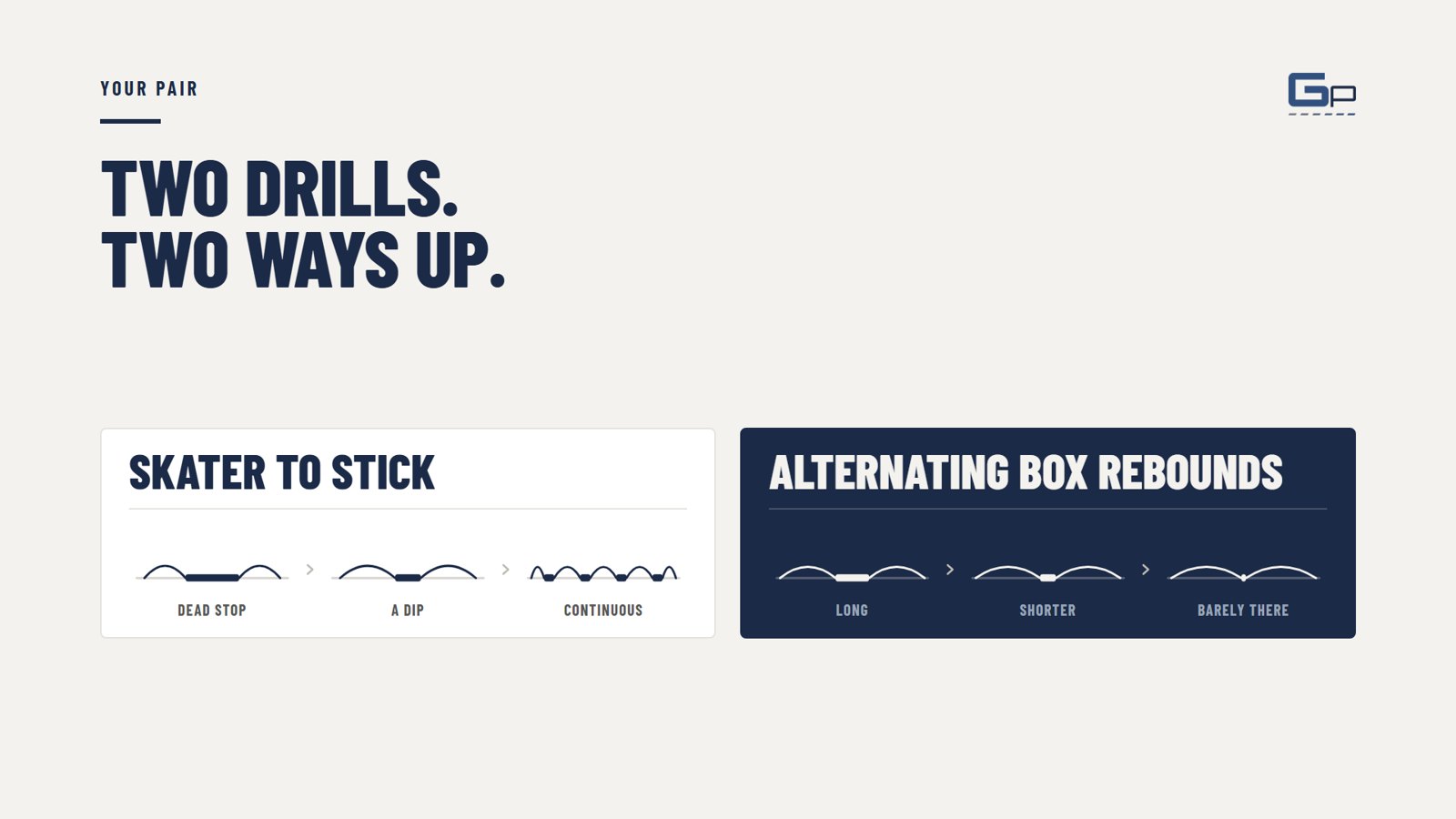
Course slide: two drills, two ways up
One
The two drills, and the one variable each of them moves.
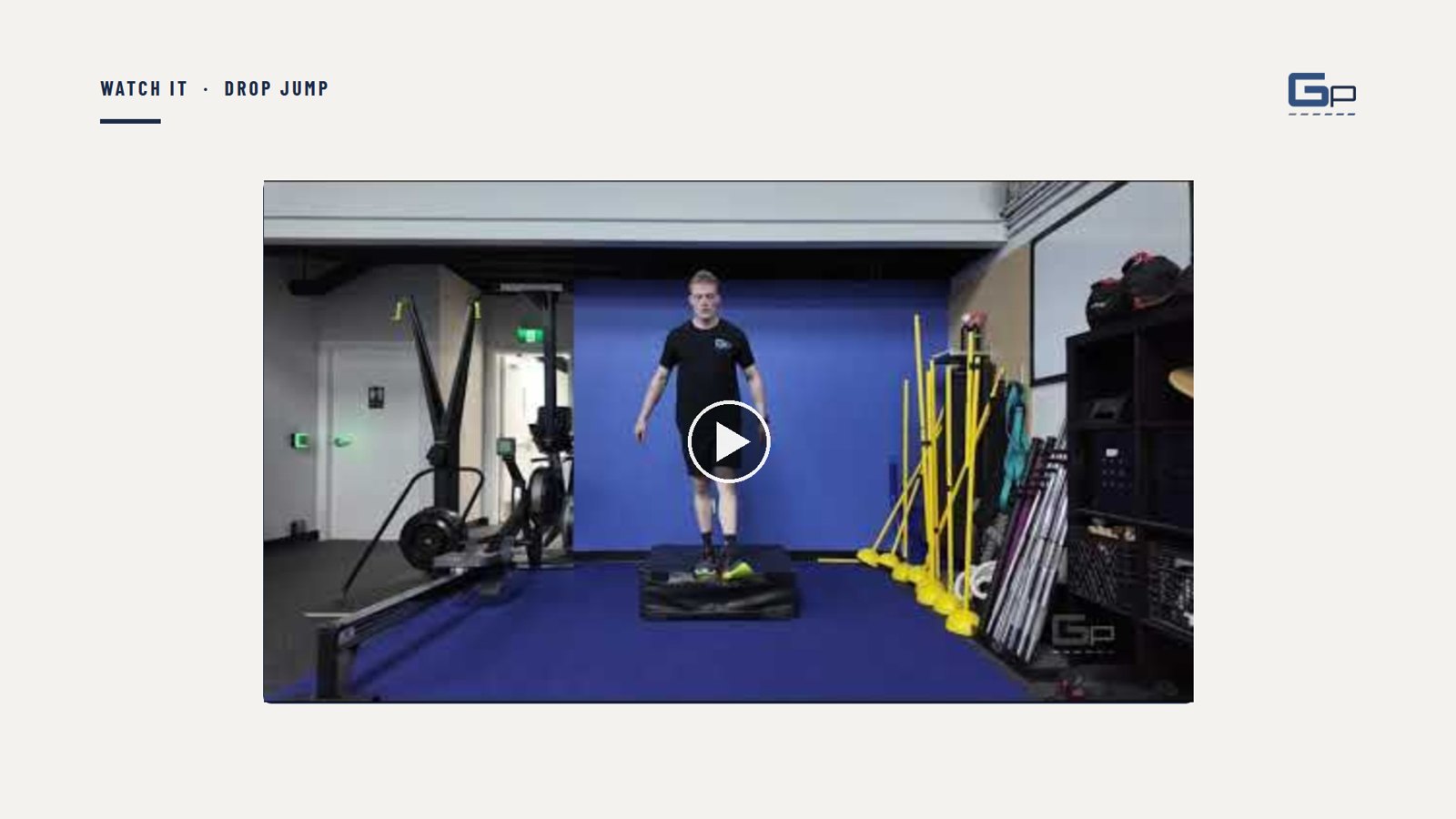
Course slide: a filmed drop jump demonstration
Two
A filmed demo of the drill, playing inside the lesson or attached in the YouTube library.
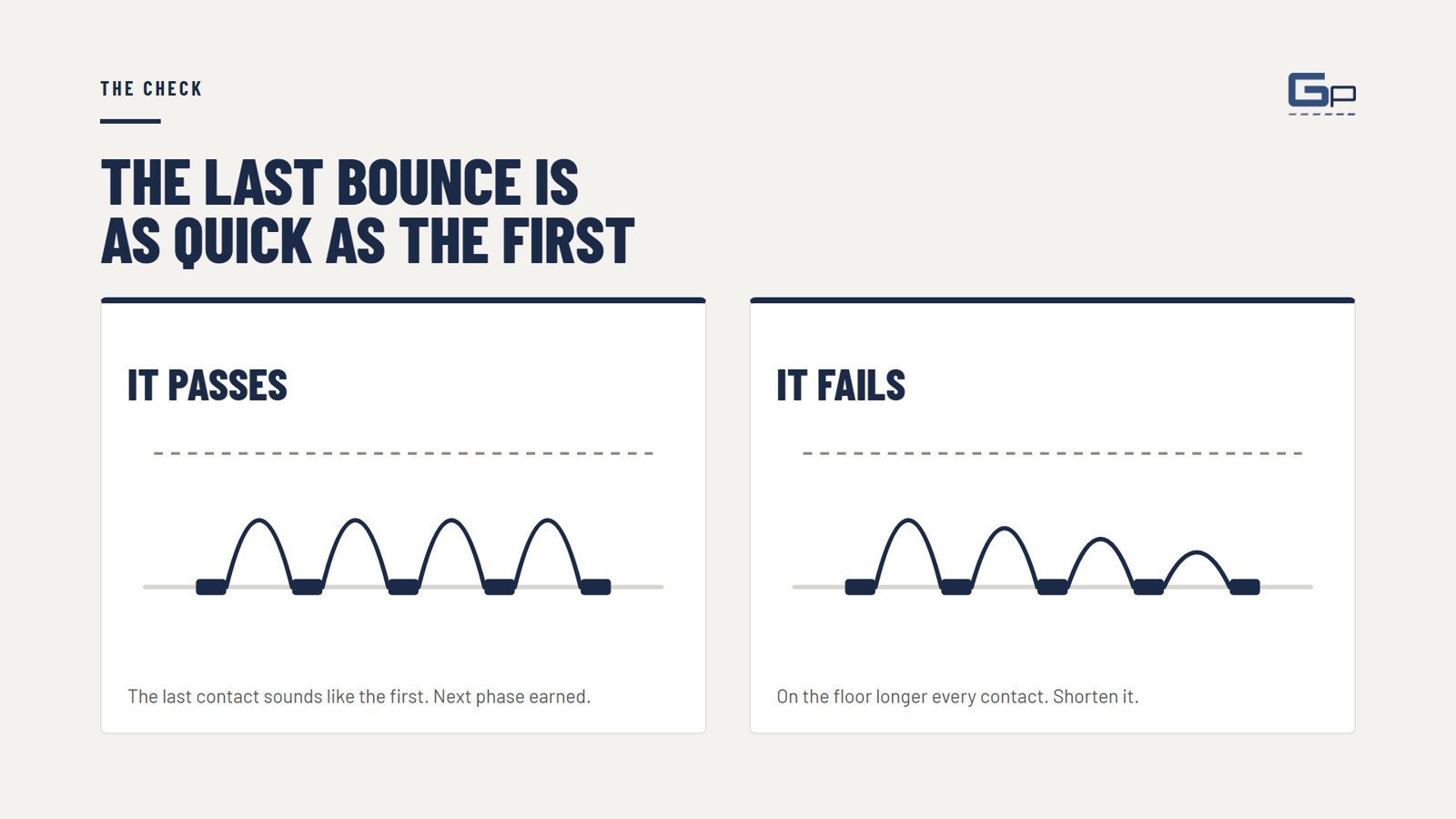
Course slide: the check, passing and failing
Three
The check, passing and failing side by side.
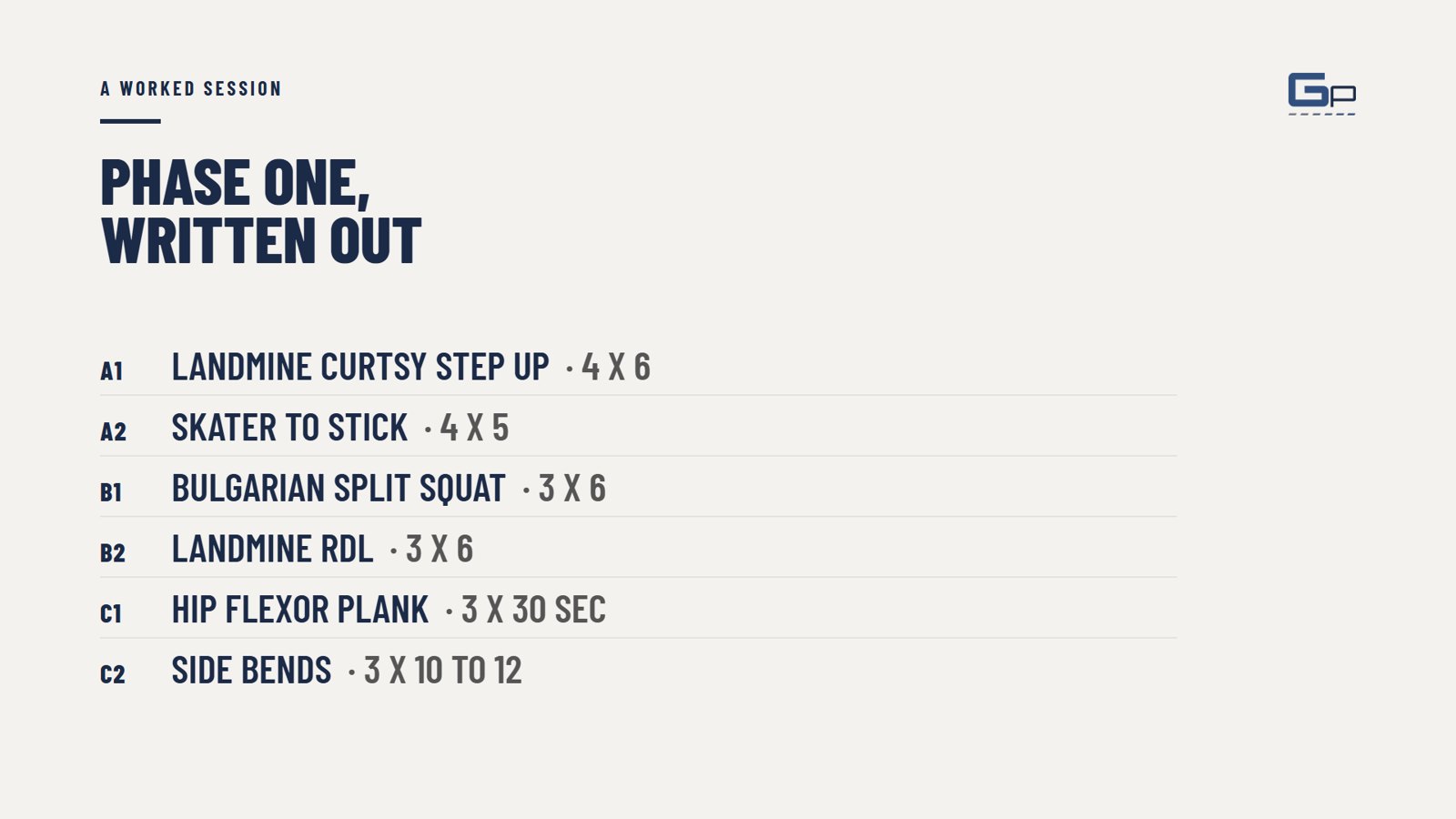
Course slide: phase one, written out
Four
Phase one of the block, written out set by set.

Watch lesson one first ↑

Questions

Answered straight.

I've never done plyometrics. Am I too early for this?
No, this is the right place to start. One of the eleven videos exists purely to answer whether you're ready, and it has two standards in it: sticking a landing, and holding a low fast bounce. If you can't clear those yet, the course tells you what to do until you can.
I coach other people. Is this useful to me?
Yes, and probably more than it is to a beginner. The course is the decision-making, not just the exercise list: what each kind of jump is for, what makes one harder, what tells you someone's earned the next step, and when to pull them out. You can use that on anyone in front of you.
Is this a training program?
It's a course. The twelve weeks in it are the worked example, so you can see the reasoning followed all the way through instead of left as theory. You can run it, and plenty of people will, but what you're buying is the understanding.
What equipment do I need?
A box, some hurdles, a pair of dumbbells, and a floor you can land on.
How long does it take to get through?
Eleven videos, a little over forty minutes of watching in total. You can start using it straight away.
Will this make me jump higher?
Yes, but it will teach you what you're doing and why, which is what's been missing. Nothing here measures you, so I'm not going to promise you a number.
I don't play a sport. Is this still for me?
Yes. Most people belong to the 4 goals, but if you do play a sport, the last video shows you how to read and map your sport, and then map yourself so you know what to work towards.

Know why you are doing it, or stop doing it.

Eleven videos, the reasoning behind every choice, and one worked-out example for each of the four goals.

Coach Dries · Grossen Performance
€47 €27Built To Bounce, yours for good